

Menu
Poetry Mutual Press
VRZHU Press
Welcome to 81 Names Press, home to forthcoming books of poetry and the catalog of our former imprints, VRZHU Press and Poetry Mutual. Here you'll find all the books we've published together.


")


Menu
Poetry Mutual Press
VRZHU Press
81 Names Press was begun by two friends and neighbors who ran a reading series for a decade in the Brookland neighborhood of Northeast Washington, DC. Along the way they had the privilege of introducing monthly audiences to the work of poets from near and far. Over dinner one night they decided they'd start publishing books by poets they knew and loved. First under the moniker of VRZHU Press (a slightly mad portmanteau of their last names which never failed to be mispronounced) and later under Poetry Mutual. After almost twenty years of small press publishing we've managed to have a great time while bringing great poetry to the public!
We take our current name, 81 Names Press, from our inspiring guiding light, the poet, Fernando Pessoa who is believed to have used up to eighty-one names in his career as a writer. Like Pessoa's example, we enjoy publishing as an opportunity for high art and high play and have used different names and guises in our friendly work of bringing poetry into the world.
Formerly
Poetry Mutual
& VRZHU Press


Menu
Poetry Mutual Press
VRZHU Press


")


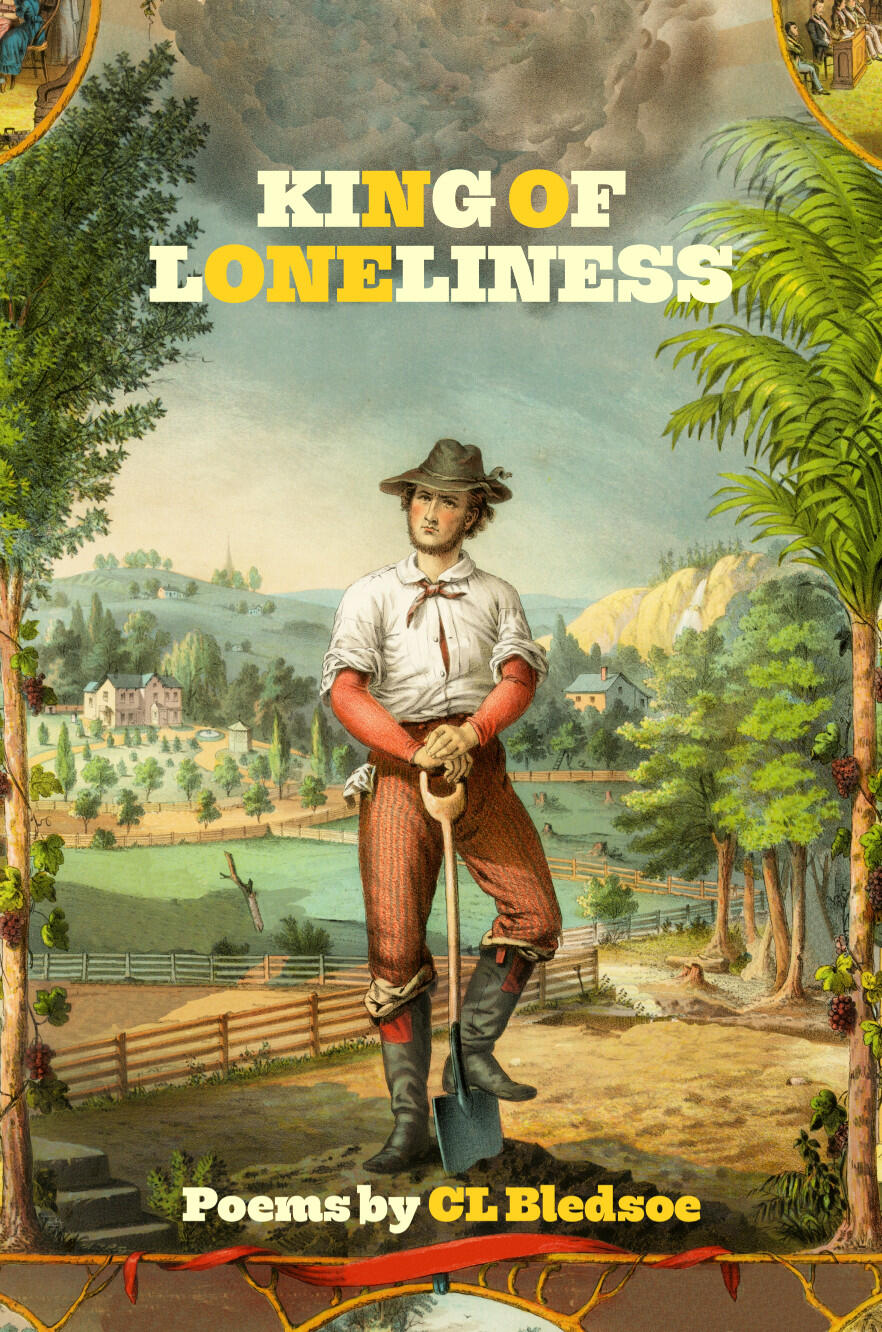
King Of Loneliness
Poetry Mutual Press
2017
King of Loneliness presents innovative and accessible poems about a 21st century America caught between irony and anxiety. In his fifth book of poetry, Bledsoe uses humor and an honest eye to tour a republic whose citizens have been uprooted by media saturation, political absurdity, and personal uncertainty.
PURCHASE ONLINE
Praise for CL Bledsoe's King Of Loneliness
“Like the respected zen dada poet Shinkichi Takahashi, CL Bledsoe may be headed for a “one mat room.” He has written with precision and passion of a brutal rural childhood, the difficulties of communication and love, even today's reigning metaphor for our walking dead culture, zombies, in poetry, short stories, novels and reviews. But in The King of Loneliness you can feel the heat of living burning through his reasoning. The beginning of lines are embedded parenthetically in the ends of lines preceding them, as if he is juggling many thoughts at once and can barely contain them. But he does not abandon hope, because “nihilism is the sacred cousin of Wall Street” and his trademark humor is ever present. You pay a dear price for
awareness, but “dumb is free.”
Rupert Wondolowski
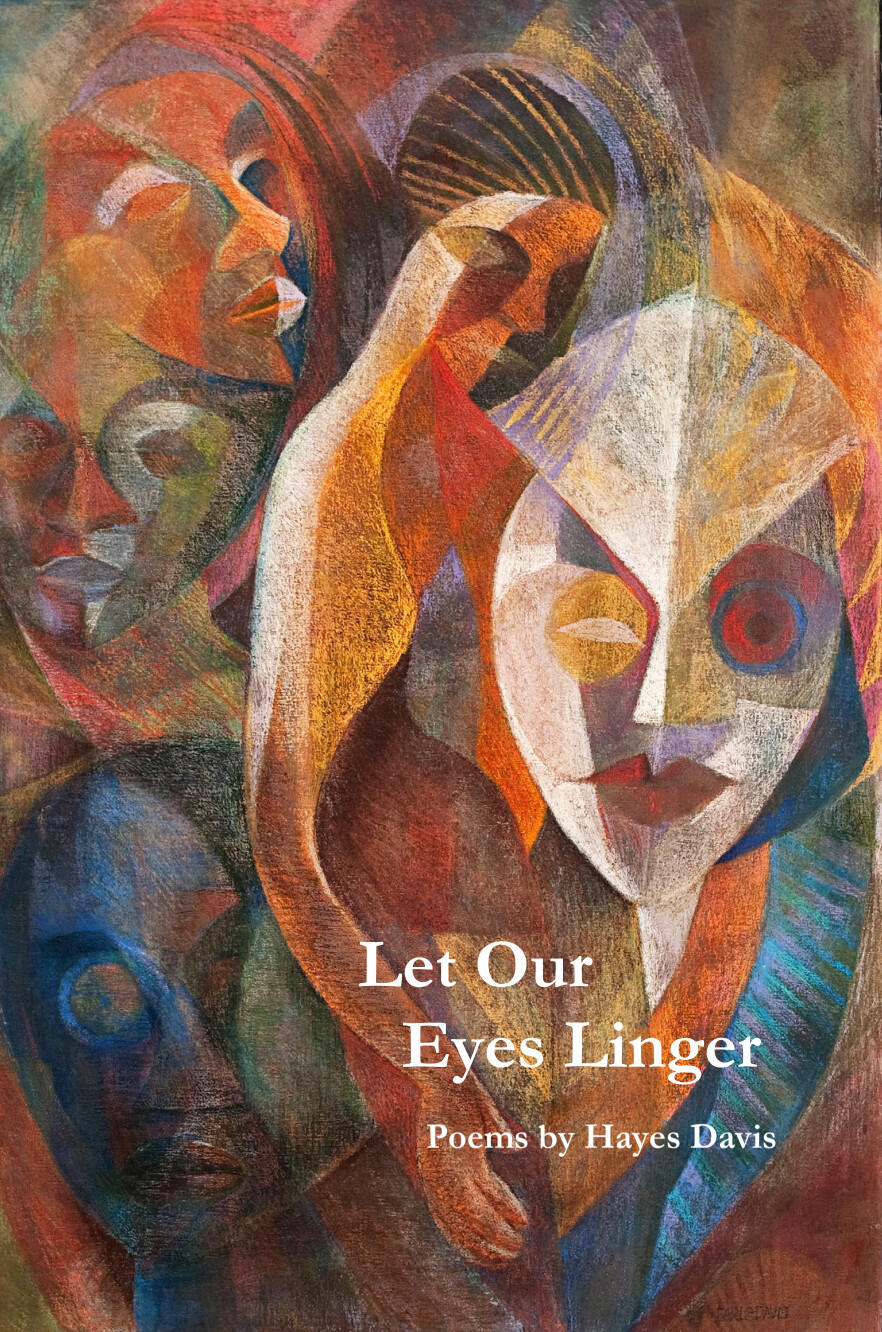
Let Our Eyes Linger
Poetry Mutual Press
2016
Let Our Eyes Linger delves deeply into the author's life as son, grandson, father, husband, artist, and schoolteacher while illuminating currents of racial identity and the plight of other black men.These include Jim, the runaway slave from Mark Twain's Adventures of Huckleberry Finn, who speaks here in his own words in poems that deepen one of the most complicated and controversial characters in American Literature.
PURCHASE ONLINE
Praise for Hayes Davis' Let Our Eyes Linger
“In Let Our Eyes Linger, Hayes Davis fashions his poems out of the vulnerability and strength that comes from loving and being loved. These poems explore Hayden’s austere and lonely offices. Part homage to his wife and children, part homage to his father, all a testament to how the stories we tell ourselves to get through the day can become the poetry that speaks to more than our own existence. Davis writes that his father “knew confidence as a vested commodity,/ its installation as vital as anything fathers give sons.” These poems show that the poet understands that love is just as vested and just as crucial.”
Reginald Dwayne Betts
“In his masterful first book, Hayes Davis examines the black family in the 21st century, especially the everyday triumphs and limitations of a black man’s love. Davis’ poems invite comparisons with Robert Hayden and Gwendolyn Brooks’ poems of 20th century family life. He uses enormous formal skill to anchor the poems, but it is the great heart at the center that wins us. After Hurricane Katrina, Davis watches a newscast and sees a so-called “looter” running from a store, not with a TV under his arm, but with Huggies and a milk carton. Receiving news of his son’s questionable behavior from his Pre-K teacher, Davis thinks about the black boys in the high school where he teaches: “(T)hese schools chew these boys, spit some defeated, /. . . two what-could-have-beens for every confident stride/across the stage.” What can a black father say? Let Our Eyes Linger is Davis’ eloquent answer. He advises dignity, humor, and compassion in this profound tribute to a family’s love.”
Toi Derricotte
“In this first book of poems, Hayes Davis bravely reveals love, fatherhood, and loss, truths that stand both on and off the page. As each moment renders its dappled wisdom, the reader suddenly understands: We need such truth —such vulnerability— in the word.”
Honorée Fanonne Jeffers
“Hayes Davis's first collection is as much about art as it is about autobiography, and both lessons have been well learned. This is a book that validates a life, just as it reaffirms the quality of the poetry that represents its story.”
Stanley Plumly
“The long-awaited debut of Hayes Davis is here at last, a complex pattern of experience that builds, poem by poem, into a network of insights binding many identities: son, grandson, life-partner, father, teacher, and most of all, poet. Poems that dramatize the contingencies of family; of its direct influence on the kinds of language we speak, and think and feel with; poems that draw honestly the flight of eros from the domestic scene, as well as the endurance of love & devotion; of small losses that ring through time with rich tones; of secret alienations and internal distances—such poems by Hayes Davis are stirring in their common but difficult recognitions and sensitive portrayals. Even more impressive is how they refract a brilliant, bold set of poems that adopt the mask of Mark Twain’s runaway slave, Jim, one of the great characters of American literature. I’ve often felt, reading Twain’s novel, that Jim’s nobility and humanity somehow deserve a better narrative, one even more sensitive to the problems of race, difference, and subjectivity. I never expected to find such complementary revisions in contemporary poetry. But it’s here that Davis’ bold interpolations of Jim’s consciousness and interior song, his way of being—his sympathy, fear, regret, sorrow, his morality and heroic love—are recaptured in the texture of his expressive rough nuanced vernacular: these poems by Davis are stunning displays of craft and conscience. They stand out and announce the presence of a new poet we’ll want to hear more from soon.”
Joshua Weiner
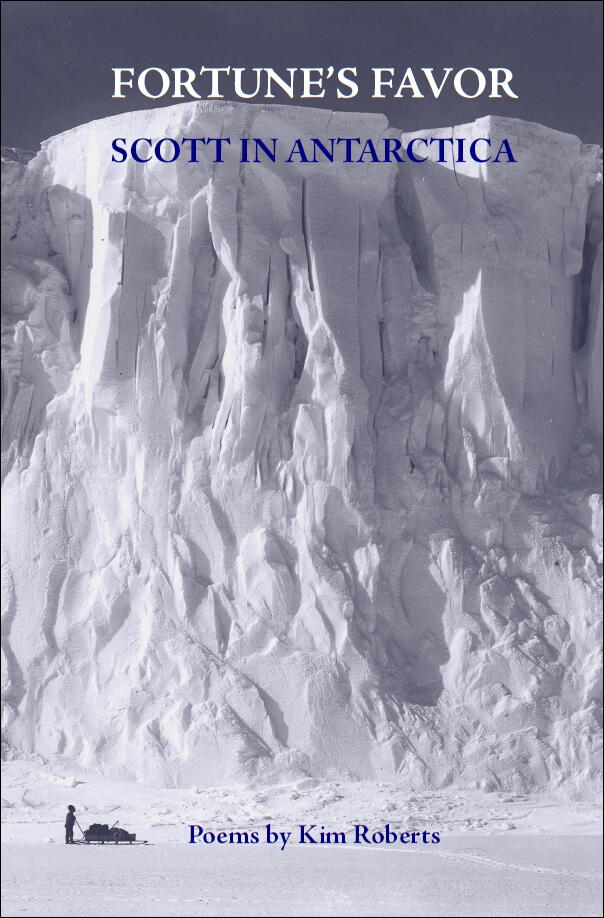
Fortune's Favor:
Scott In Antarctica
Poetry Mutual Press
2015
A connected series of blank verse sonnets written in the voice of Antarctic explorer Robert Falcon Scott, who led the ill-fated Terra Nova Expedition of 1910-1913. Based on Scott’s actual journals, this book recreates the Heroic Era of polar exploration, before the advent of modern transportation, communications or mechanical technologies.
PURCHASE ONLINE
Praise for Kim Roberts Meikle's
Fortune's Favor: Scott In Antarctica
“Fortune’s Favor,” the ironic title of Kim Roberts's fine recreation of Scott’s second expedition to Antarctica, is perfect for the book’s combination of high courage and terrible luck. Though we may know the story, its retelling in disciplined, beautifully descriptive verse brings it to startling life.”
Linda Pastan
“The sea stood up and soon we found/ourselves in steady plunge.” Thus speaks Robert Falcon Scott, Antarctic explorer in “Stormy Seas,” which opens Kim Roberts’s arresting sequence of poems—compressed epic that chronicles an expedition to the South Pole. And “plunge” is apt— immediately I found myself immersed in the macro (“Throughout the winter, ice sheets move and twist,/they tear apart and press up into ridges”) and the micro (“He couldn’t walk, a wild look in his eyes”) elements of this renowned story, both ill-fated and moving, in which five men, tight-knit (“It’s quite impossible to speak too well/of my companions”), push forward on a journey that tests the limits of human endeavor.”
Francisco Aragón
“Roberts has uncovered the poetic beauty of the “stiff upper lip” resolve found in the journals of polar explorer Robert Falcon Scott. The story of his tragic second expedition to the South Pole has seldom been told with such formal control, flashes of color, and suspense. In Fortune's Favor, Roberts has created sonnets as 'unrivaled and sublime' as Antarctica's Mt. Erebus itself - Brava!”
Reginald Harris
Reviews:
“Science is inferential and rational, poetry is inspired and metaphorical: Roberts merges these two intellectual forms by deriving her own experience—what in fact becomes the book—from the written logbook of the explorer, as she re-enacts his voice and thought; there is thus a double textuality at work here…The work is a slight but wonderful tribute to humanity’s endeavour towards the acquisition of empirical knowledge in the face of terrific natural duress.”
Dr. Kevin McGrath, Polar Research
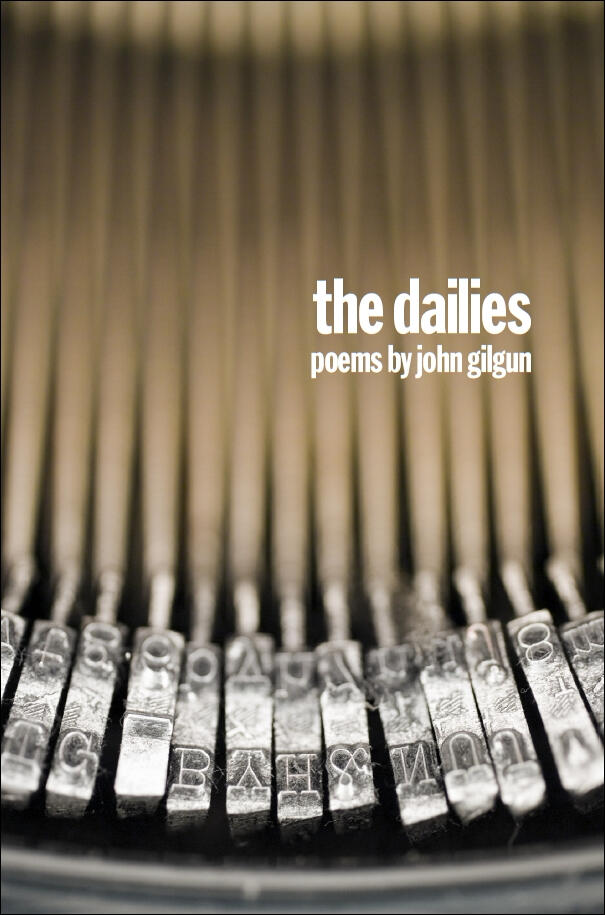
The Dailies
VRZHU PRESS
2010
For over ten years the celebrated poet and teacher John Gilgun has written a poem a day. The poems have made their way into the in-boxes of poetry lovers around the world. VRZHU PRESS is delighted to publish The Dailies, a sampling from his poetic discipline of encountering the world and capturing it on the page.
Praise for John Gilgun's The Dailies
“Forget luminosity,” says John Gilgun, offering instead a series of dark though often dazzling meditations on the beauty and “superlative squalor” of modern America. Whether imagining sex with Jesus (or Hamlet), arguing politics with David Wojnarowicz, or finding a Zen beauty in crows and road kill, John Gilgun’s The Dailies is quirky, irreverent, and lively—and filled with those moments of truth we need.”
Ed Madden
PURCHASE ONLINE
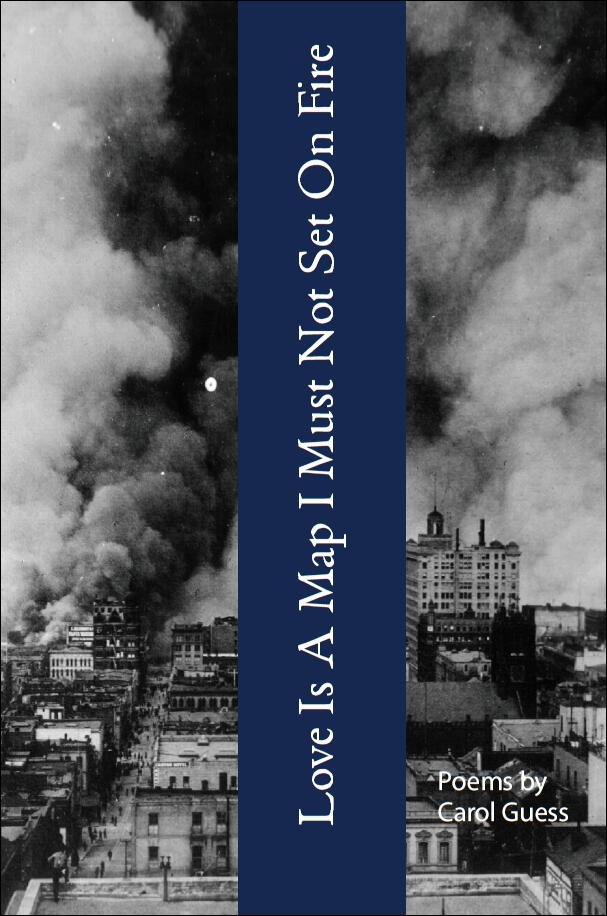
Love Is A Map
I Must Not Set On Fire
VRZHU PRESS
2009
Carol Guess' third book of poetry surveys the aftermath of a relationship and the geography of loss. Humor ebbs in amidst this poet's observance of the personal and the nation's upheaval.
PURCHASE ONLINE
Praise for Carol Guess'
Love Is A Map I Must Not Set On Fire
“Borderless and relentlessly topographical, this book maps the real and unreal Seattle as “the city of two women.” Is it raining, or are these pixels on someone else’s computer screen? Carol Guess must be writing from the top of Mount St. Helens; she sees it all and never averts her gaze.”
Amanda Laughtland
“A work of rare emotional intelligence. From its urgent beginning, “In the desolate place before forgiveness,” her words are simultaneously embroidered with a needle, and chiseled with a hammer. It is in this duality of the crafted line that her poem finds its permanence in the world and in our consciousness.”
Truong Tran

The Kimnama
VRZHU PRESS
2007
The Kimnama is a masala of history, culture, and personal transformation. Scene4 Magazine calls it “…a Whitmanesque long poem…[that] makes the reader viscerally smell, hear, touch and see the streets, mosques, gods, vehicles, shopping malls and slums of New Delhi…”
PURCHASE ONLINE
Praise for Kim Roberts Meikle's The Kimnama
Reviews:
“Lapidary verses vary with brisk evocation of streets, shops, and voices. Roberts devotes her lean book to vast India not only from her vantage point as traveler but from the eyes, ears, and tongues of Indians; their timeless spirit shines despite imperial edicts or raids by sacred cows…Passages echo and resonate as lines twine around streets or recline on roofs or ride camels or eat spicy meals or greet children or trace a god’s smile.”
Ethan Fischer, The Montserrat Review
“The language throughout is elegant and precise, and the short swinging lines reinforce the idea of passage, for me. Musical repetitions, the use of opposites, and the theme of connection, recall Whitman–especially ‘Crossing Brooklyn Ferry’ or ‘Prayer to Columbus.'”
Cheryl Snell, The Alsop Review
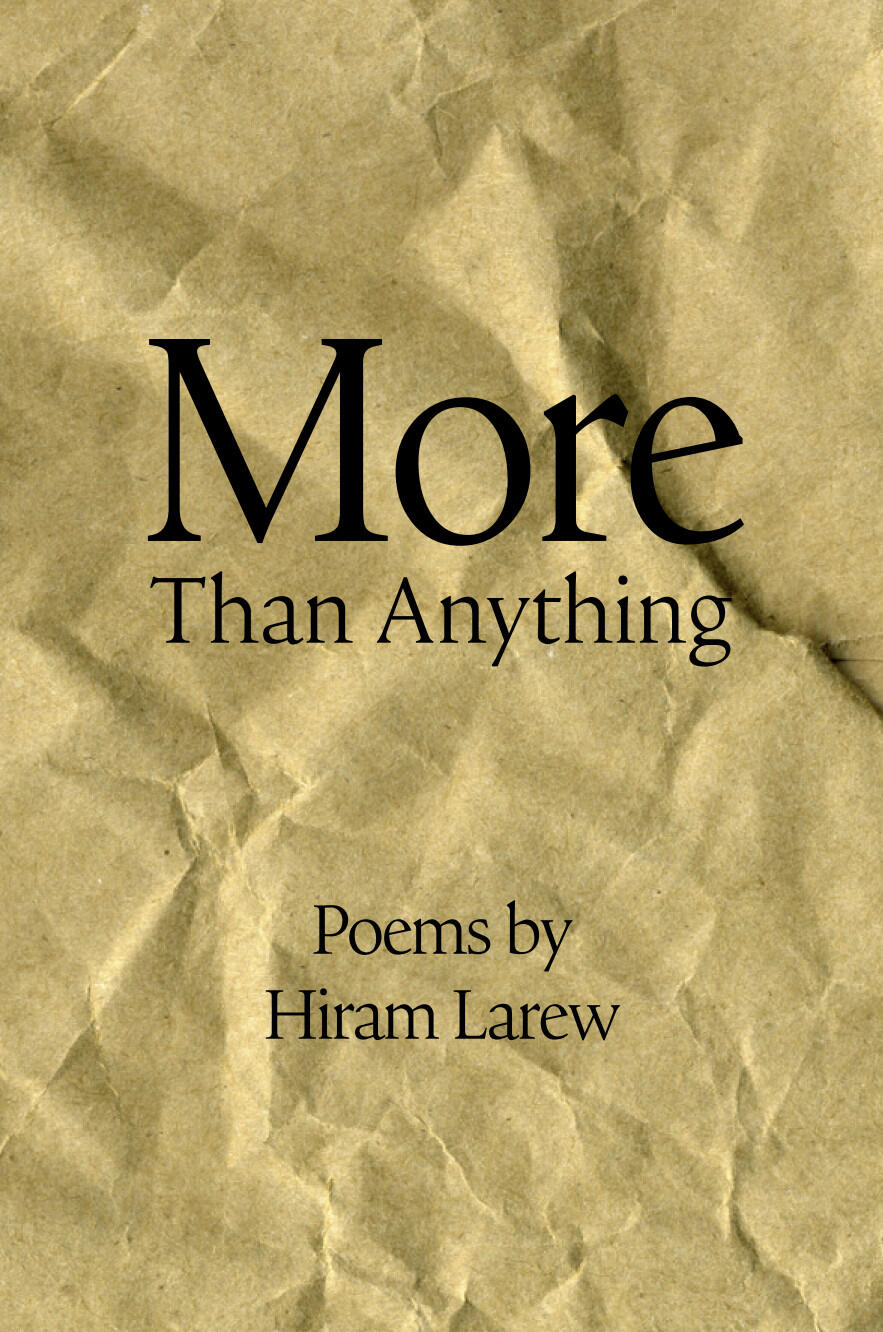
More Than Anything
VRZHU PRESS
2007
More than Anything is an audacious teenager. The book follows in the path of Larew’s first collection, Part Of, which was published by the City of Baltimore as the ArtScape Festival’s 1999 poetry collection.
PURCHASE ONLINE
Praise for Hiram Larew's More Than Anything